Nature-based green infrastructure is transforming asset management, offering sustainable and cost-effective alternatives to traditional grey assets. With traditional infrastructure responsible for nearly 79% of global emissions and half of all resource use and waste, the shift toward green solutions is vital.
Beyond environmental benefits, Green Infrastructure (GI) can deliver lasting social and economic value that often appreciates over time.
It’s a common misconception that GI simply refers to parks and gardens. IPWEA’s Director of Sustainability Dr Jacqueline Balston has defined GI as: “An interconnected network of nature-based assets that are intentionally managed to provide multiple services and benefits for the environment and human well-being”.
GI includes naturally established assets such as managed forests and waterways; managed assets that have been planted or modified like parks or restored mangroves; and nature-based hybrid assets that are supported by some grey components, such as streetscapes, green roofs, and constructed wetlands.
Yet a problem remains: many of these assets sit outside traditional asset registers, performance metrics and renewal cycles. Bridging that gap calls for new asset management frameworks, different ways of viewing value, and technological enablement.
Just as grey infrastructure has adopted technologies such as Asset Management Systems, sensors for condition monitoring and predictive maintenance, and digital twins in recent decades, GI is now entering a technology‑enabled phase.
As a starting point, advances in sensor technology, data analytics, and the Internet of Things (IoT) are enabling more sophisticated monitoring and management of GI.
In Australia, we’re shifting towards Water Sensitive Urban Design (WSUD), which integrates stormwater management into the urban landscape, and uses vegetation and permeable surfaces to manage runoff. Automated control systems can play a key role in optimising green stormwater infrastructure.
For example, the City of Monash in Victoria has installed 71 sensors to date in their stormwater pits to monitor fill levels and conditions in real-time, to allow for more streamlined maintenance schedule and faster response time to incidents.
In 2020, the City of Whittlesea in Victoria led a smart city pilot program to roll out IoT sensors to collect anonymous data on the use of spaces and parks, air quality, water levels, stormwater and waste volumes. This program helped the City improve reporting, move towards process automation, and enhance data-driven decision making to provide better service delivery across a range of community facilities.
Internationally, machine‑learning (ML) models are being used to analyse historical patterns, environmental conditions, and asset behaviour, to forecast deterioration, carbon sequestration, vegetation health, and stormwater performance.
Researchers from the University of Texas have integrated ML with data on physical, spatial, and socio-economic drivers to assess approaches to mitigate ‘urban heat islands’. By applying different ML algorithms, the team could better understand the consistent and dominant predictors of urban heat islands, and found tree canopy cover was the most effective means of reducing the heating effect in residential and commercial zones.
Similarly, scientists at Duy Tan University in Vietnam used ML to understand the variables that impact the cooling intensity of green infrastructure in the city of Hue. They found the intermingling of water bodies, parks, shrubland, and tree canopy across the city resulted in extensive areas of cooling. The models also highlighted hotspots in which interventions are urgently needed to alleviate the risk to public health during extreme heat events.
Finally, the use of virtual modelling to create a digital twin of a natural asset, or an integrated green/grey asset network, has enabled scenario modelling, simulation of climate impacts or service trade‑offs, and visualisation of future renewal needs.
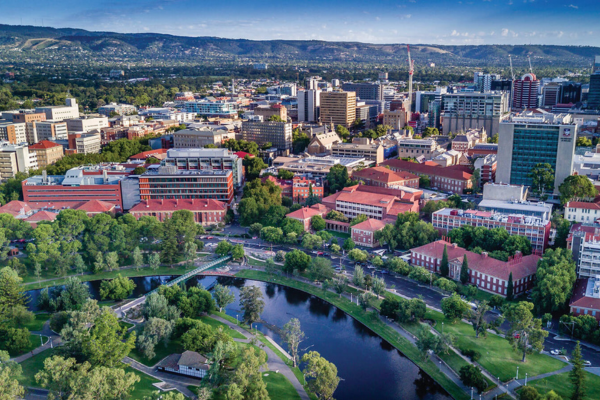
In recent years, the when the City of Unley in South Australia pledged to increase their tree canopy by as much as 20% by 2045, they implemented a digital twin for its tree canopy coverage. They used LiDAR data captured in 2018 and 2021 to accurately measure and monitor changes in tree canopy over time.
Using the digital twin, the Council determined that tree canopy coverage increased by 1.36% over the three-year period, and they have also worked to create an app that enables the community to visualise canopy changes in their area and on their property.
Many of the technologies are already in place to support councils in creating an integrated picture of their green and grey assets.
Ultimately, by incorporating emerging technologies into the management of GI, it can help local governments and asset owners to gather the data they need to understand how green assets perform and degrade over time, enable smarter renewal or replacement decisions, and support optimised maintenance and renewal budgets.
When it comes to embedding green assets into existing asset management systems and funding models, the path ahead is not without its hurdles. GI will only become core business when we treat it as infrastructure – planned, funded, monitored and renewed like any other asset class. However, with continued collaboration and innovation, technology can become the bridge that connects nature-based solutions with long-term infrastructure resilience.
IPWEA are releasing the Green Infrastructure Management Manual. This free resource will be available for download from the IPWEA website.