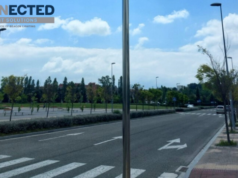
Cable theft is emerging as a critical threat to public lighting networks worldwide and is being driven by record copper prices. This crime is darkening streets for weeks at a time, eroding public safety and draining maintenance budgets, while forcing cities to rethink how they design, power and secure lighting assets.
A crime fuelled by copper prices
High and volatile copper prices have made power and communication cables a lucrative target, particularly in public spaces where access points are numerous and often poorly secured. As copper reached multi‑year highs in 2024–2025, theft from utilities and lighting networks accelerated, with incidents reported worldwide. Street and highway lighting are especially exposed because long runs of cable are distributed in accessible pits and cabinets, often with limited surveillance.
The SLSC Program monitors articles on street lighting worldwide and has observed that articles are published almost every day about copper theft impacting street lighting at prominent locations somewhere in the world. Indeed, a Google search shows that more than 20,000 articles have been published on cable theft impacting street lighting over the past year.
A recent incident in Los Angeles left the iconic 6th Street Bridge completely in the dark for many weeks in 2024 and garnered global media attention. The City of Los Angeles, which manages about 225,000 lights, has reported a 10-fold increase in copper wire theft over the past decade. In 2023-24, there were more than 6,700 thefts in the City with repair costs exceeding US$17 million. Amongst other measures, the City now offers a rewards program for information on copper wire thefts.
Closer to home, about 65km of street lights and 14km of pathway lights in the metro Perth area were reported out in July. Main Roads WA estimated at the time that it was spending $2-$3 million a year replacing stolen cabling.
Impacts on lighting and safety
Cable theft can take large sections of a lighting network offline, leaving entire arterial corridors in darkness for weeks at a time until complex repairs are completed. The Australian Standard, AS/NZS 1158 recognises that street lighting brings roughly a 30% reduction in the risk of serious accidents on main roads. The safety implications are of long stretches of lighting being out are therefore serious: unlit streets increase risks for drivers and pedestrians, contribute to crashes, lead to higher crime and undermine broader road safety and community goals.
Financial and operational burden
Beyond direct material losses, theft imposes heavy labour and opportunity costs on utilities, councils and transport authorities. The costs of repairing stolen cable often far outweighs the value of copper stolen. It is often akin to partial network reconstruction, requiring trenching, re-pulling conductors and re-commissioning multiple poles on a circuit. To do this, crews must be diverted from other works to such emergency restoration, while the impact on budgets can be significant. As with the examples from the City of Los Angeles and Main Roads WA, it can be in the many millions of dollars a year in some jurisdictions.
Hardening infrastructure and deterring theft
Cities and road authorities are responding with a mix of engineering and security measures. Hardware changes include:
- elevating wiring
- tamper‑resistant brackets and pit lids
- switching from copper to lower‑value conductors such as aluminium (see image of sign from the Brisbane park)
- reinforcing cabinets with heavy locks, thicker steel and more concrete
- using solar lighting
In terms of security measures and other deterrents, many authorities are deploying cameras, mobile surveillance towers, alarms and even AI‑enabled monitoring of critical sites. An increasing number of jurisdictions have introduced reward schemes to encourage public reporting while many have tightened scrap‑metal regulations and ID checks at recycling centres.

Rethinking power models with solar and smart tech
As noted above, some cities are piloting or scaling stand‑alone solar street lights, which use local batteries and contain no long copper runs between poles, effectively removing the main incentive for cable theft on those segments. Others are adding smart controllers and IoT platforms that can detect abnormal electrical loads or outages in real time, helping operators pinpoint theft locations quickly and reduce the time streets remain dark.
Towards resilient public lighting
Globally, the responses combine material substitution, physical hardening, active surveillance, disruptions to scrap markets, rapid‑fault detection and selective use of off‑grid solar systems in a layered defence. As copper prices and infrastructure demands remain high, cable theft is likely to remain a major operational risk for councils, road authorities and utilities, making these multifaceted strategies essential to keep streets safely lit.