Economic growth does not happen without infrastructure. This was the message from Troy Anderson at IPWC 2025 as he presented the case study of the Parkes Special Activation Precinct (SAP), the first of a number of similar initiatives by the NSW State Government.
Anderson, who is the director of the Parkes and Moree SAPs for the Regional Growth NSW Development Corporation, explained that the government is committed to four precincts across the state.
In addition to Parkes, the others are in Wagga Wagga, the Snowy Mountains and Moree and the total government investment is $1 billion, funded by the sale of the NSW Government’s Snowy Hydro assets.
“The precincts are designed to unlock the untapped potential of regional areas, driving sustainable industries and economic growth by leveraging unique local advantages and fostering innovation,” said Anderson.
“Each offer a focus in various industries such as manufacturing, freight and logistics, agriculture and tourism.”
The SAP’s are in various stages of delivery with both Wagga Wagga and Parkes the most progressed, with land releases and serviced land available to commercial tenants.
Each of the precincts has a particular strategic economic focus.
In the Snowy Mountains, for example, it is about facilitating the region to become a 365 day per year tourist destination, adding summer adventure and leisure activities to the traditional snow fields, which are busy for only a small part of the year.
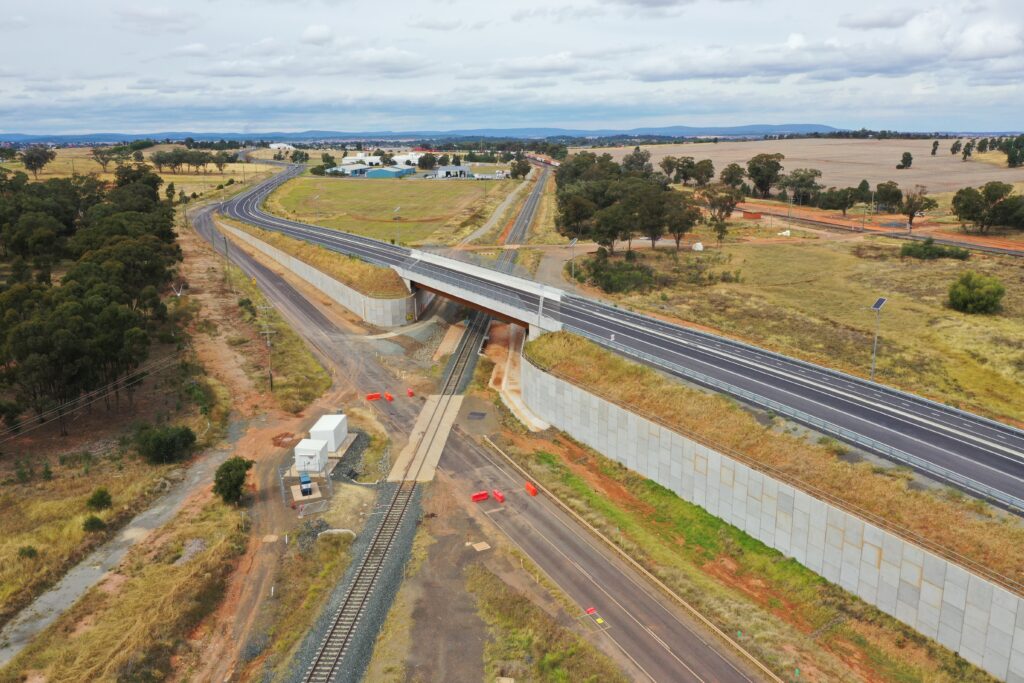
In the case of Parkes, it is proximity to the Inland Rail project, which will connect Brisbane to Melbourne, that has enabled the city to emerge as a flagship destination for freight and logistics services.
At the same time, the Trans-Australian Railway connects Sydney to Perth, with Parkes sitting at the only junction of Australia’s two rail spines.
With this location it is possible to get freight from Parkes to 80% of Australia’s ports within 12 hours.
So the vision for the Parkes SAP, which spans 4800 hectares or around 5000 football fields, is to create road, energy and communications infrastructure which can attract businesses servicing the strategically important transport hub.
The relatively cheaper cost of land is a drawcard, and there is a catchment of a workforce of 70,000 people within a 1.5 hour drive.
Roads, water and stormwater works were undertaken in 2023, and stage 2 sewerage works are on track for late 2025.
One of the proposed major projects within the SAP is a $1.5 billion energy from waste facility.
Led by a consortium including the Tribe Infrastructure Group, the proposed project aims to process 600,000 tonnes of non-recyclable waste annually and convert it to enough power for 80,000 homes.
Troy Anderson explained that one of the key advantages of the SAP’s was around faster planning and consent.
“For investors and developers who have previously been tied up with the planning process this is a breath of fresh air,” he said.
The NSW Government, which has allocated around $320 million to the Parkes precinct, has already completed technical studies during the master planning process to determine strategic land use and enabling infrastructure requirements.
These are available to potential investors, saving them the expense and time in having their own work done.
In terms of planning consent, State Significant Development and council planning requirements are “switched off” for investment inside the SAP, and almost all developments will be compliant unless they are hazardous or compromise biodiversity or cultural heritage.
Within the precinct, investors apply for an activation precinct certificate (APC) which is a check to ensure that a development complies with the delivery plan.
“We have a 30 day legislative approval for an APC, and currently we are averaging 17 days,” said Anderson.
He gave the example of Pacific National, which planned a $35 million expansion comprising a new rail siding and a larger terminal.
As a complying development an APC was issued within 22 days, the company engaged a certifier, and work was able to commence.
The SAP also offers business concierge services, working with business to navigate government red tape while the embedded sustainability initiatives in the precinct make it easier for businesses to achieve their sustainability goals, access new resource efficiencies, and gain a competitive edge.
“Without infrastructure, what we have is just a 4800 hectare paddock with no services,” said Anderson.
“Without infrastructure you can’t progress the vision of the SAP, facilitate investment and achieve the desired outcomes.”