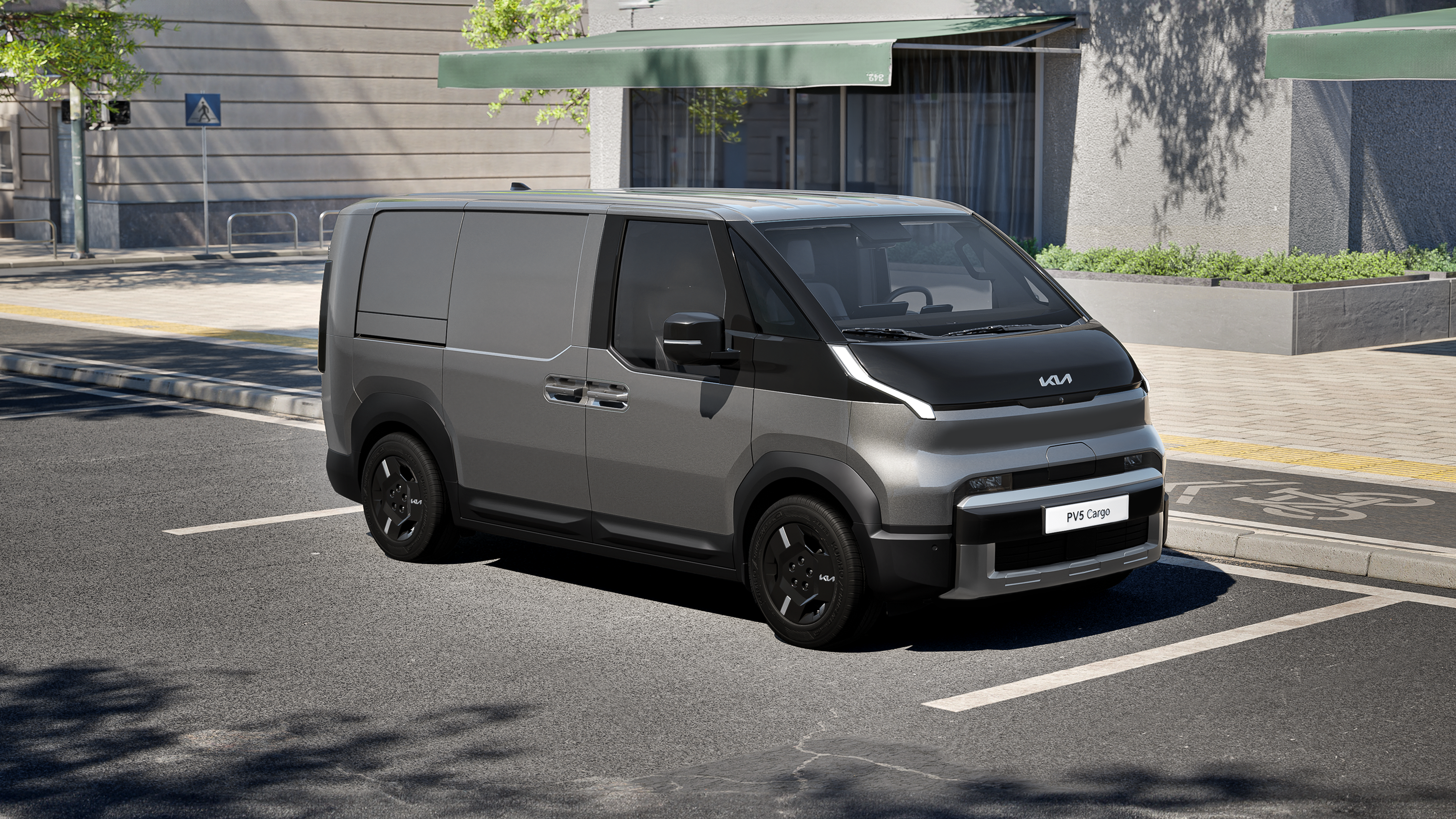
Kia Australia has revealed the Kia PV5, the first dedicated model in the brand’s Platform Beyond Vehicle (PBV) strategy and a major step toward customer-centric, sustainable electric mobility. Developed on a modular, conversion-ready architecture and supported by advanced software connectivity, the PV5 forms the foundation of Kia’s broader PBV roadmap, which aims for 250,000 global PBV sales by 2030. Future PBV models will expand the lineup, including the larger PV7 in 2027 and the flagship PV9 in 2029, extending the architecture across diverse commercial and mobility sectors.
Kia Australia has confirmed the PV5 will arrive locally in Q2–Q3 2026, with local ride and handling tuning commencing in early 2026 to ensure the vehicle meet Australian fleet and road expectations. Detailed specifications, features and pricing will be announced closer to launch.
Driven by Customer Insights
The PV5 was developed through a PBV-exclusive process informed heavily by real-world customer needs. Kia worked with major global mobility partners, including Uber and hosted PBV Partners Day events across Korea, Europe, North America, the Middle East and Japan. More than 120 customers representing mobility services, logistics operations, healthcare distribution and trade-focused industries directly influenced the PV5’s design and functionality.
These insights resulted in three key innovations:
- Removable front passenger seat, creating flexible cargo space
- Durable, stain-resistant interior materials engineered for intensive daily use
- High roof walk-through configuration enabling easier movement between cabin and cargo areas
Kia also collaborated with sector-specific partners to ensure compatibility with existing professional equipment and workflows. These partners included DHL Korea (logistics), GeoYoung (healthcare), Korea Post (national post), Kakao Mobility (mobility platform) and Milwaukee Tools (electric tools). Their requirements shaped the integration of roof mounting points, L-Track interfaces and support for tool- and equipment-ready interior structures. This multi-industry development approach ensures the PV5 can be efficiently configured for trade professionals, delivery fleets, medical distributors and ride-hailing services.
Designed for Versatility Across Work and Lifestyle
Engineered for maximum flexibility, the PV5 can adapt seamlessly between commercial and personal use. It can function as an airport taxi or premium shuttle during weekdays and then be reconfigured for leisure, camping or family activity on weekends. The modular design also suits specialist uses such as mobile offices, on-site service vehicles or mobile content-production platforms for film crews and digital creators.
To support remote and off-grid operations, the PV5 includes indoor and outdoor Vehicle-to-Load (V2L) capability delivering up to 3.68 kW, ideal for powering tools, office equipment, refrigeration, lighting or content-production devices.
A dedicated Wheelchair Accessible Vehicle (WAV) variant features a side-entry ramp, low-floor design and universal wheelchair-securing systems, supporting inclusive mobility providers and community services.
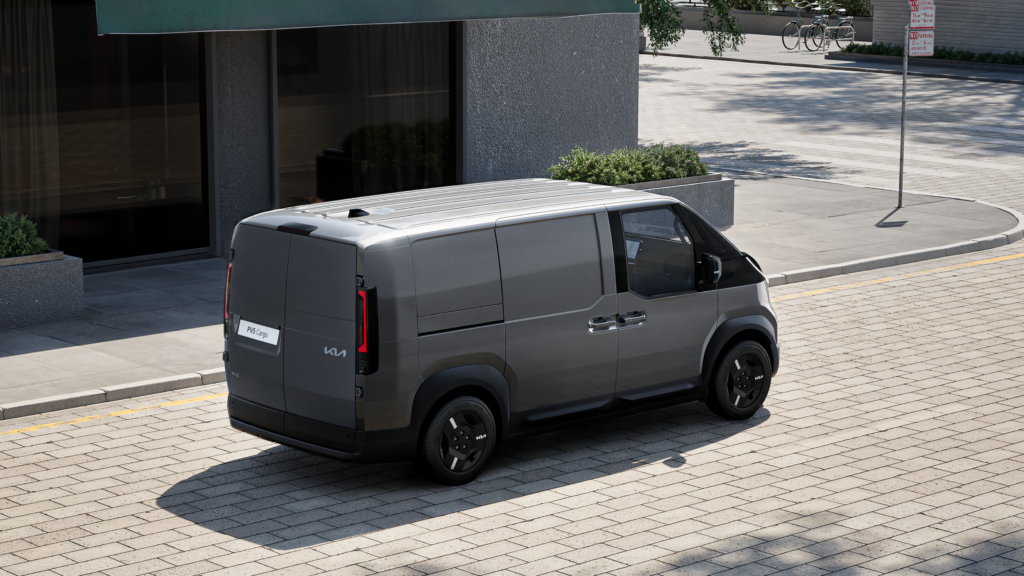
Visually, the PV5 follows Kia’s Opposites United design philosophy while prioritising durability and easy servicing. Geometric cladding, modular bumpers and unique A-pillar lighting give the vehicle a distinctive, functional appearance. A low scuttle and beltline improve visibility for urban drivers, and practical features such as protective cladding and three-piece bumpers reduce repair downtime.
E-GMP.S PBV Platform and Modular Body Engineering
The PV5 is the first vehicle built on Hyundai Motor Group’s E-GMP.S platform, a PBV-specific evolution of the company’s dedicated EV architecture. Using Kia’s Integrated Modular Architecture (IMA), essential systems such as motors, batteries, suspension and thermal management are standardised across models. This simplifies manufacturing, enhances component compatibility and creates a scalable base for future PBV expansion.
The platform’s low-floor design maximises interior space and improves accessibility. Structural integrity is ensured through ultra-high-tensile steel, reinforced battery protection and a multi-skeletal crash structure. Kia’s Flexible Body System allows rapid development of up to 16 variants by combining a standardised cabin module with interchangeable rear, side and roof structures. Passenger, Cargo and High Roof configurations can be created without major structural changes.
Cargo variants feature a 419 mm rear step height, improving loading ergonomics, and provide between 4.0 m³ (L1H1) and 5.2 m³ (L2H2) of cargo space, accommodating up to two Euro pallets.
Performance, Battery Options and Charging
The PV5 offers a choice of battery technologies tailored to fleet needs, including:
- 43.4 kWh LFP
- 51.5 kWh NCM
- 71.2 kWh NCM (long-range)
Maximum output is 120 kW and 250 Nm, with the long-range model delivering up to 416 km WLTP. All battery types support 10–80% fast charging in about 30 minutes, allowing operators to choose between long cycle life (LFP) or maximum driving range (NCM).
Connectivity and Driver-Assist Technologies
Inside, a 7.5-inch digital cluster and 12.9-inch infotainment display run a PBV-specific Android Automotive OS with integrated fleet-management tools, body-function controls and access to the Pleos App Market. Digital Key 2.0 supports NFC, BLE and UWB.
Safety and driver-assist technologies include:
- Smart Regenerative Braking
- Smart Cruise Control
- Highway Driving Assist
- High Beam Assist
- Blind-spot Collision-Avoidance Assist
- Parking Collision-Avoidance Assist
To learn more about the Kia PV5 or discuss fleet opportunities, please contact the Kia Fleet Edge team.