Naturalisation initiatives in the Queensland city of Bundaberg have been so successful that neighbours with adjacent properties have donated their own land for inclusion in the project.
Dwayne Honor, Branch Manager of Infrastructure Assets for Bundaberg Regional Council, presented case studies of several of the Council’s naturalisation projects at IPWC 2025, and detailed some of the successes.
“I have never seen people donate land like this before in my engineering career, so that was a good measure of success,” said Honor.
“One of the outcomes was that property valuations increased by about $25,000 per property for the homes directly adjacent to the project, and we’ve had numerous real estate agents coming to talk to us.”
Two of the projects involved the naturalisation of Saltwater Creek and Washpool Creek, heavily urbanised catchments running for a combined 17 kilometres in the heart of Bundaberg City.
From the 1950s and onwards, many sections of both creeks were “upgraded” into around 72,000 square metres of concrete channels, a single functioning drainage asset with no ecological value. There was little to attract any public use.
A 2020 condition assessment indicated that major replacement and rehabilitation was required within 10 to 20 years, and that replacing the concrete channels “like for like” would cost between $40 million and $60 million.
Work needed to be done to address flood risk, but instead of immediately going for the “like for like” solution, Honor and his council colleagues explored alternatives on how to make these waterways a sustainable asset that would deliver on the needs of the community both now and into the future.
Masterplans were developed with community consultation, with a vision for the concrete channels to be replaced with naturalised waterway corridors where this was technically feasible.
The idea drew positive responses from the community during the consultation phase, with one resident saying the community wanted to “get back to more green and sustainable living.”
“I am very excited about this Washpool Creek Master Plan, it gives me hope for other areas of the region,” another submission said.
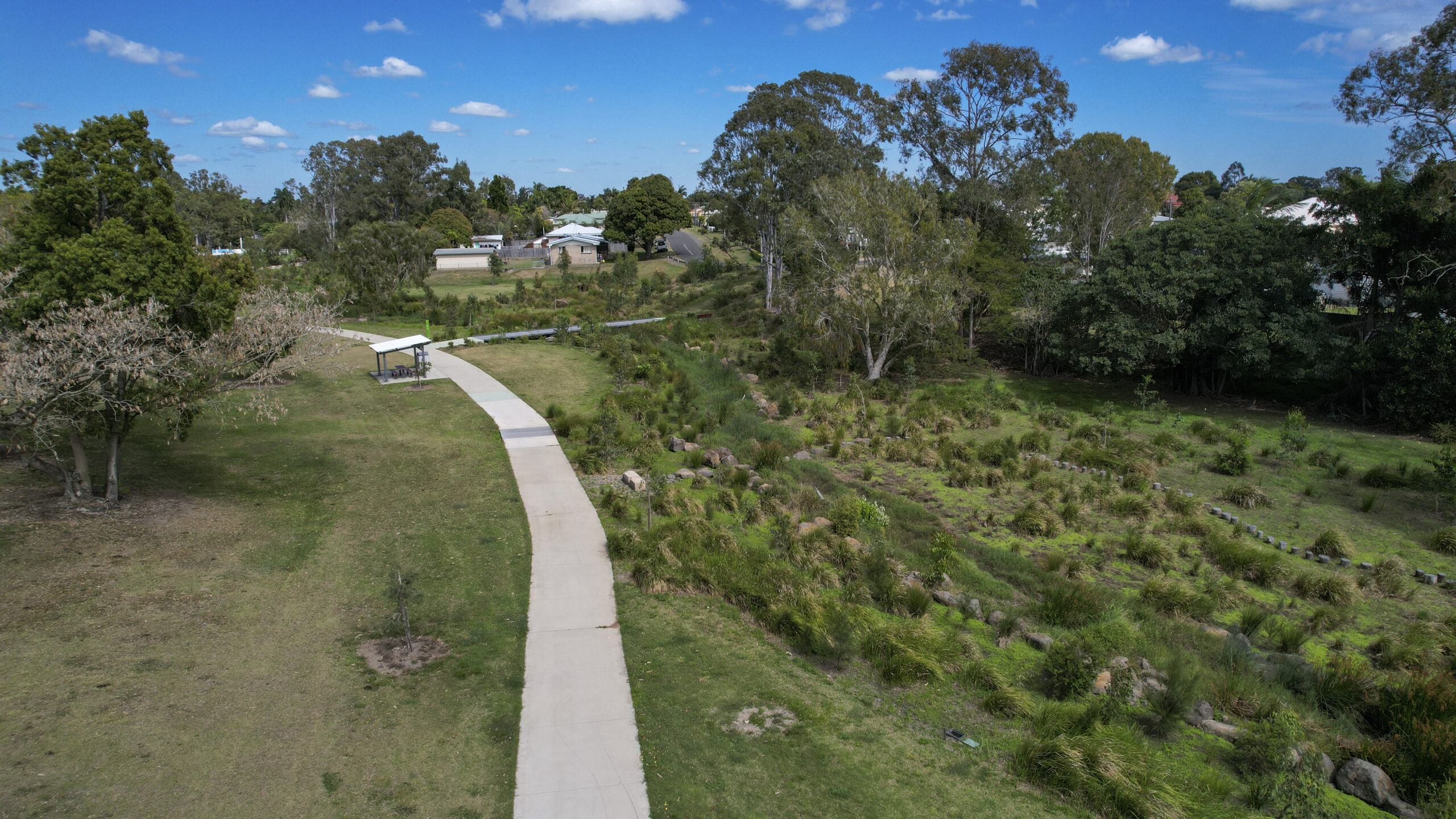
Naturalisation involved the implementation of 20,000 square metres of naturalised channel and engaged floodplains, and the planting of up to 100,000 new native trees, shrubs and groundcovers.
This was integrated with new park facilities, nature play infrastructure, and active transport bikeways.
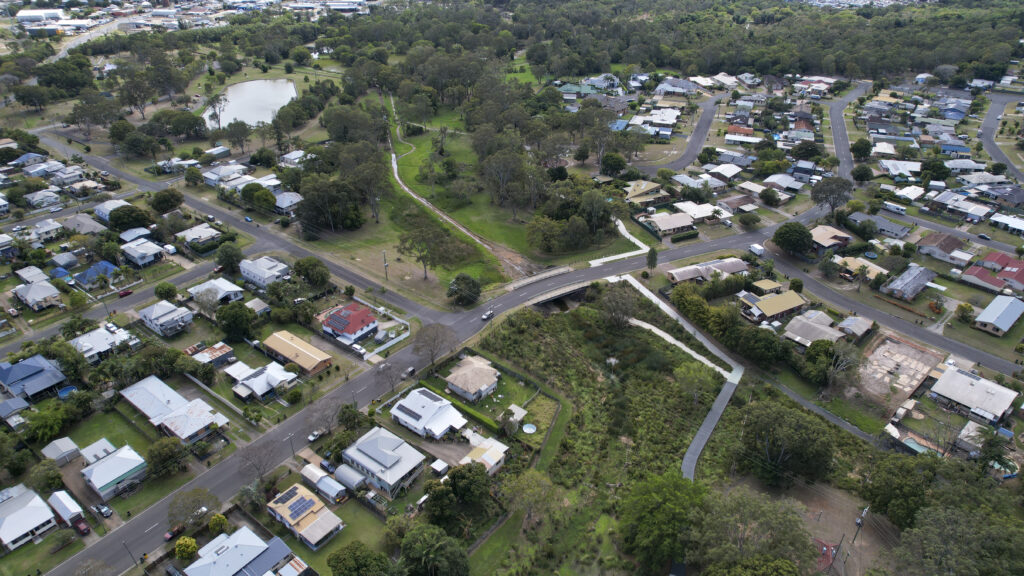
Now, the creeks are in daily public use and wildlife has returned to the corridor.
A survey of residents impacted by the council’s first naturalisation project of the Belle Eden Park Waterway in 2021 found that 85% said they were using the space more or at about the same level after the project completion.
“We didn’t build this project for frogs, but we have a whole new population of frogs that we’ve attracted, so much so that after a recent flood season we got a complaint about the sound of the frogs mating,” said Honor.
The frog complaint would seem to be a minority view. 81% said they were either “satisfied” or “neutral” about the project.
Some responses have been very enthusiastic. “This project has been a fantastic project turning a very ordinary waterway into something very special,” was a response from one resident.
Key learnings from the project include that the community is supportive of nature-based infrastructure solutions, and that – while hard to quantify – the approach was more economically sustainable when compared with concrete.
“For the first five years these systems cost more than concrete because we have to establish vegetation but in the long run they pay a dividend,” said Dwayne Honor.
“The point when concrete assets reach end of life is the natural point to adapt to something else, and I suggest that when it can work, everybody takes the opportunity.”