By Adele Finch, Chair of the Australian Public Lighting DNSP Community of Practice
There are about 2.5 million street lights in Australia and almost 90% of these are managed by electricity distributors (called Distribution Network Service Providers or DNSPs in the industry). Public lighting infrastructure represents a critical intersection of public safety, energy efficiency, and urban innovation. However, for many years, the challenges associated with managing these vast lighting networks were often addressed in isolation by individual utilities.
Recognising the need for a unified approach to these systemic issues, the Australian Public Lighting DNSP Community of Practice (CoP) was formally established in July 2025. The participating DNSPs include: Horizon Power, Western Power, Jemena, AusNet, United Energy, CitiPower, PowerCor, TasNetworks, Energex, Ergon Energy, Ausgrid, Endeavour Energy, Essential Energy, and SA Power Networks. By bridging geographical and organisational boundaries, the CoP serves as a centralised forum for industry leaders to align on technical standards and regulatory strategy.
Strategic Objectives and Knowledge Sharing
The primary mandate of the Community of Practice is to increase industry collaboration. By sharing operational insights and technical data, the group aims to solve complex engineering challenges and navigate the rapidly evolving regulatory landscape. This collaborative model ensures that best practices are adopted nationally, reducing duplication of effort and accelerating the deployment of modern lighting solutions.
Since its inception, the group has transitioned into a consistent monthly meeting cadence. These sessions provide a structured environment to analyse specific technical themes and operational hurdles. Key topics addressed to date include:
- Type 9 Metering: Evaluating the technical requirements and financial implications of the new metering standard.
- Maintenance Management: Discussing common industry challenges and identifying inconsistencies in maintenance profiles.
- LED Rollout Strategies: Streamlining the transition from legacy HID lighting to high-efficiency LED systems.
- Safety and Compliance: Addressing technical specifications for pedestrian crossings and mitigating glare to meet Australian Standards.
Addressing the Type 9 Metering Challenge
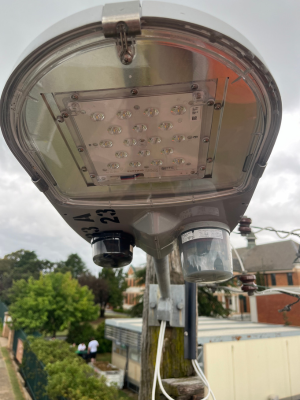
A primary focus for a specialised subset of the CoP is the current regulatory framework surrounding Type 9 metering. Under existing regulations, the transition to smart lighting is frequently hindered by cost-prohibitive metering requirements. These financial barriers prevent many customers from realising the full benefits of intelligent lighting systems with potentially high Type 9 metering costs flowing through the retailer to end customers.
The CoP is collaborating on several solutions:
- Formal submissions to the Australian Energy Market Operator (AEMO) advocating to allow for the reversion of Type 9 metering to Type 7 (the traditional system of assigning loads to unmetered lighting). This proposed change is intended to reduce the economic barriers to smart lighting adoption.
- Investigations are underway for dimming and trimming profiles to be applied directly to unmetered (Type 7) meters. This approach aims to assist smart nodes that will not be grandfathered under current rules, providing a technical workaround that captures energy savings without the prohibitive overhead of Type 9 infrastructure.
The implications of this advocacy are significant. By resolving these challenges, the CoP aims to provide better value for money for our customers and a clearer pathway for the integration of smart city technologies. This effort reflects the group’s commitment to ensuring that regulation supports, rather than stifles, technological advancement and cost-efficiency.
Future Initiatives and Industry Engagement
The Community of Practice recognises that solving long-term infrastructure challenges requires engagement across the entire value chain. To facilitate deeper technical exchange, the group is currently developing an annual face-to-face knowledge-sharing session.
This event will serve as a high-level forum for DNSPs to align on future roadmaps and technical requirements. In the coming months, the CoP will be seeking support and participation from key industry suppliers.
The formation of the Australian Public Lighting DNSP Community of Practice marks a significant shift toward a more integrated and efficient lighting sector. By speaking with a unified voice on regulatory changes and sharing critical insights on asset management, the participating DNSPs are better positioned to deliver safe, reliable, and cost-effective lighting solutions for the Australian public.
The CoP remains dedicated to removing the technical and financial obstacles that currently impede the modernisation of our public spaces. Through sustained collaboration, the group is ensuring that Australia’s lighting infrastructure is prepared for the demands of a digital and energy-conscious future.