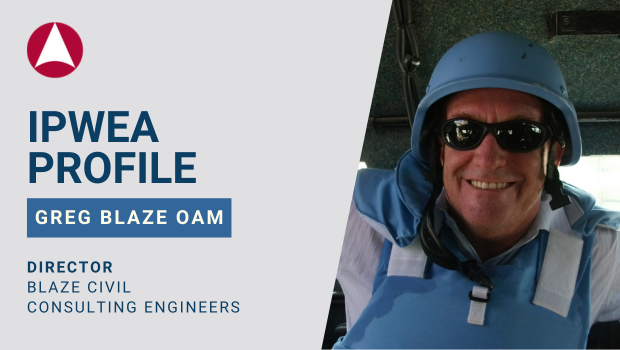
When most people have long service leave they take a cruise or go on a long and relaxing holiday. Greg Blaze took a very different approach.
After a three decade career in civil engineering, largely for local government organisations in the north of New South Wales, Blaze opted for a deployment as a humanitarian volunteer in one of the world’s most dangerous regions.
In 2009, Blaze was deployed through humanitarian response agency RedR Australia to the World Food Programme (WFP) in Somalia for three months, assisting in the construction of a food warehouse as well as working on road and bridge projects.
“I was there for three months, living in Kenya and flying in and out of Somalia,” says Blaze.
“I didn’t actually go to the capital Mogadishu because that was considered too dangerous but wandered around some of the other parts of the country which were probably equally as dangerous.
“I loved the whole experience.”
Blaze loved the experience so much that six months later the WFP contacted him and asked him to return to Somalia, where he worked as the Lead Engineer for four years, doing six months contracts and then a month off to recuperate.
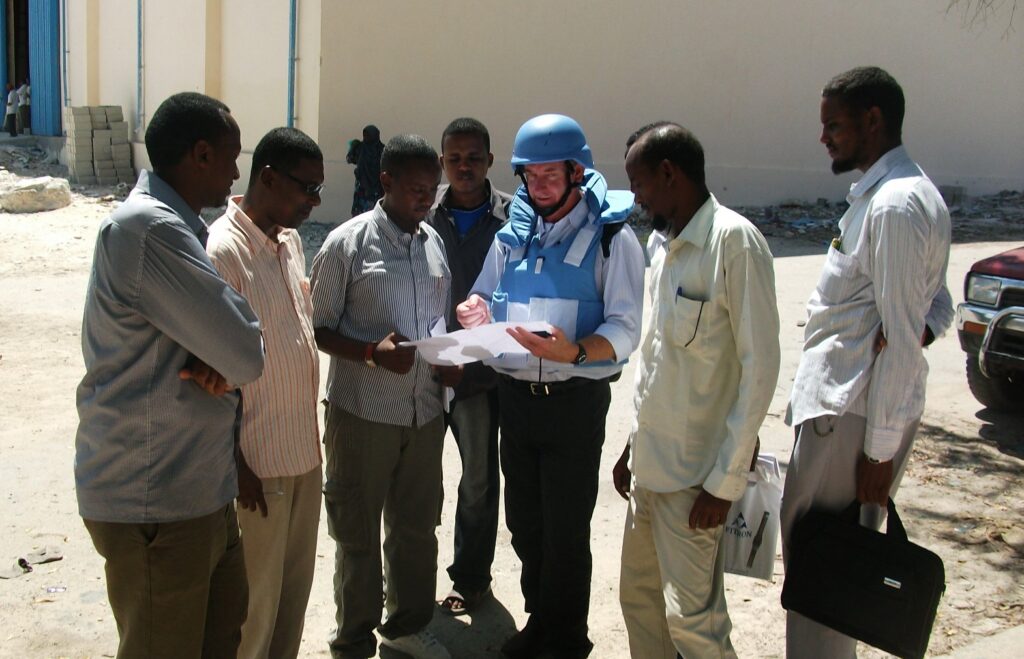
“The first time I went to Mogadishu was probably early 2010, and they had to get approval from the head of the United Nations in New York to allow a person to go in there,” he says.
“They had their own plane. It was a 40 seater jet and I was the only passenger on the plane, and I felt like a rock star.
“I sort of expected there would be a red carpet there for me when I landed, but they had a security guy and he said to me ‘Greg you might want to hurry across the tarmac because there’s been snipers here this morning’ and I had to do that with nine kilos of body armour.”
In his time in Somalia, Blaze’s team built warehouses and a marine tower. They dredged the port of Mogadishu and salvaged sunken vessels which were blocking up the harbour.
“Asset management in the humanitarian world is very different, because most of the assets over there are funded by someone else, so unfortunately they are not looked after so well,” he says.
“I observed that a bit in Somalia, where there’s no local government to maintain assets so they tend to fall apart, and that’s a whole other part of the story.”
When the Somalian deployment was over Blaze came back to Australia and his other career, as a senior engineer in local government and to a major project in the city of Maitland.
When RedR came calling again, however, Blaze was ready and keen and it led to another deployment, this time in Israel with the United Nations Relief and Works Agency (UNRWA) building schools and hospitals primarily in the West Bank.
“I worked with their procurement department, looking at contracts and how they dealt with contractors, but also giving advice to the engineering department,” says Blaze.
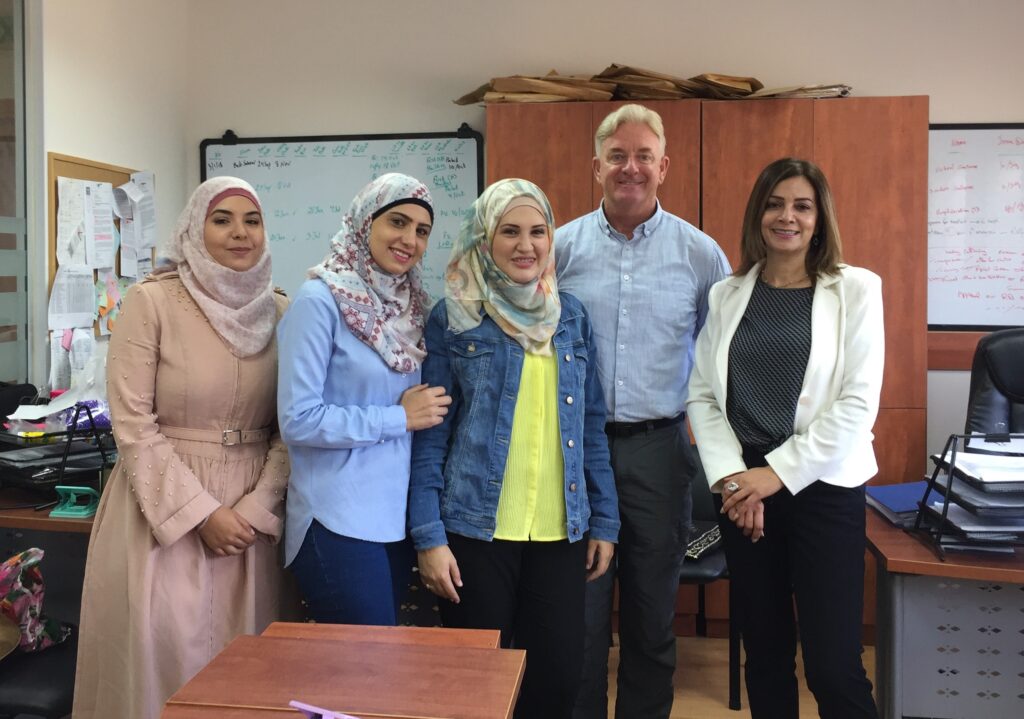
The work in the Middle East inspired Blaze to write his book ‘There Are No Waves in Palestine: The True Story of an Aussie in Jerusalem the Holiest City on Earth.’
A keen surfer of the abundant waves on the NSW north coast, Blaze didn’t find any surf in Palestine but did find a unique opportunity to observe the reality of the conflicted space which is the West Bank.
“Working with the Palestinians and living with the Israelis, I had a unique opportunity to observe the conflict from both perspectives.”
Blaze’s humanitarian work was recognised in 2018, when he was awarded an Order of Australia Medal (OAM) for services to civil engineering.
Asked to describe his skills, Blaze says that – both in NSW and in humanitarian deployments overseas – he is “good at managing people and money.”
“I think people would say my communication skills are quite strong, and I have an ability to bring people together,” he says.
“Technically, maybe my skills are not that great. If I think about things like road design or stormwater drainage design on CAD, I’m aware of the concepts but I’ll send it to somebody else to do it because I haven’t done that work in maybe 30 years.”
Blaze has also leveraged his Australian contacts and its expertise in his humanitarian work.
There were plans for a water storage tank in Mogadishu when he first arrived, and he became concerned when he looked at the plans.
“They wanted to change the design double the height of the water tank and I’m looking at it and thinking ‘there’s going to be problem there,’” he says.
“I’ve been there about two weeks, there’s a war going on, suicide bombers and people getting killed every single day.
“They were going to just adjust the sketch for the water tank for the additional height and start the work the next week.”
At this point Blaze contacted a colleague in NSW and sent him the plans and asked him his opinion.
“He sent me an email and said ‘Greg, this thing is going to fall over under its own weight.’
“I was in a panic because I just had the weekend, and I started going back through all my books on design.
“But on Monday morning I go into the office and my NSW colleague had done a new design over the weekend and had sent it to me and I showed it to the guys in Somalia and we built it and it didn’t fall over.”
If you’re interested in working with RedR, Australia’s leading humanitarian response agency, visit their website to learn more about their training opportunities and deployments.