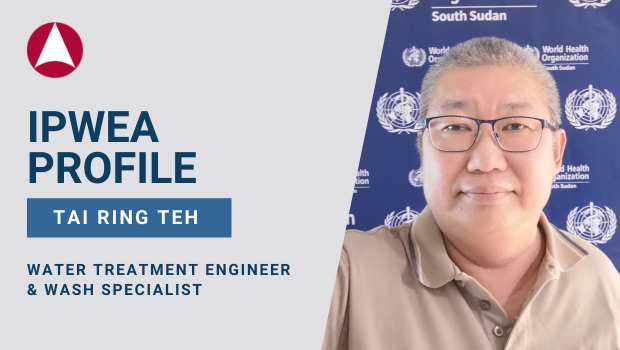
If anyone was to list all the environmental and humanitarian disasters in the world since the Sumatra Earthquake and Indian Ocean Tsunami of 2004 it is a fair bet that Tai Ring Teh would have been there.
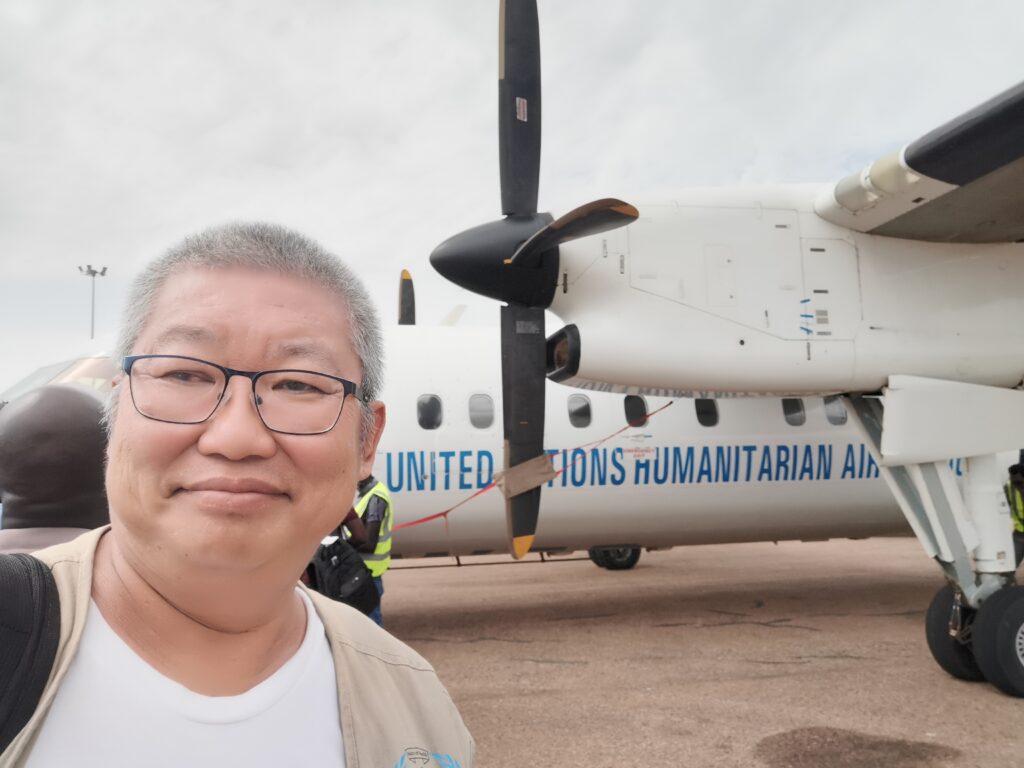
Beginning in 2005 in the weeks after the 2004 tsunami, Teh has worked as a humanitarian engineer and a water, sanitation and hygiene (WASH) specialist across Asia, the Pacific and Africa with a range of agencies such as the Red Cross and Red Crescent, UNICEF, UNHCR and REDR Australia.
He has worked in Myanmar, Bangladesh, Indonesia, Fiji, Somalia, Sudan, Rwanda, the Philippines, and Nepal, and when not on site helping deliver crucial sanitation infrastructure he has also had an extensive career in lecturing and training other engineers in disaster response.
For his work, he has been recognised with a Humanitarian Overseas Service Medal from Australia’s Department of Prime Minister and Cabinet.
“It all started when I was part of the Malaysian Red Crescent volunteer group when the tsunami happened,” says Teh.
“I was operating a construction company in Malaysia, but then went to Indonesia as a volunteer in Aceh, which had been completely devastated.
“I was the only engineer, the rest of the emergency workers were all medical staff, and I realised that it was something I really like to do and where I can contribute a lot.”
That volunteer deployment was the beginning of a major career pivot for Teh.
“The American Red Cross were looking for a water and sanitation engineer and I happened to be in the right place,” he says.
“At the time I was still a volunteer, and I asked ‘how long will this take’ and they said probably a year.
“It was clear that I couldn’t put in one year as a volunteer when I was running my own company, but they made it plain that this was a paid position and this is the kind of work I have been doing ever since.”
While Teh says his WASH humanitarian career began in 2004, it was the experience of building a small hydropower dam for a nomadic community in his native Malaysia which originally inspired him in his career direction.
“It was a high school summer job on my father’s construction work site, about two or three hours down a road into the jungle, and then another half an hour just to reach the work site,” he says.
“That was the time I actually decided to go into civil engineering.”
In any disaster or emergency relief operation, WASH services are absolutely critical when large populations have been displaced or where local infrastructure has been destroyed by a natural hazard or conflict.
Communities need access to safe drinking water, adequate sanitation and hygiene, while water born diseases are major killers.
While conceding that humanitarian work is often stressful and difficult, Teh has had moments of great satisfaction from his efforts.
In Aceh, he helped villagers on a remote island build a new water catchment in the jungle to pipe water back to their rebuilt village.
“I drew a simple dam and hired the local labour to build it,” says Teh.
“The villagers knew that this was for their own good and their own water supply, so they totally exceeded my expectations.
“Instead of something very simple, they made it into something very grand and permanent and this was a surprise to me.”
Two decades later Teh went back to Aceh and was met at the airport by one of the residents from the island.
“He still remembered me, and he told me that the water supply that I had designed and built was still running, and that everybody loved it,” he says.
Teh’s most validating experience for all his humanitarian work came from his time in Myanmar, working in the aftermath of Cyclone Nargis which killed as many as 150,000 people.
Deployed by UNICEF as a WASH specialist, Teh worked in the disaster zone checking the water quality.
“Everywhere I went I was followed by children wondering what I was doing,” he says.
Fast forward 13 years later and Teh was giving a presentation on humanitarian engineering at the University of Sydney.
“There was one student in the class and he stood up and said that the reason he was in engineering was because he saw someone from the UN in his village taking water samples, and at that moment he said ‘I want to be that person,’” says Teh.
“I asked him where it was in Myanmar and he mentioned one particular area, and I realised that it was me that he saw.
“And since then he had studied really hard and went from his rural village to the National University in Yangon, and then got a scholarship for the master’s degree at the University of Sydney with the aim of taking his skills back to Myanmar and assist in building his country.”
This was an outcome Teh would never have expected, and to even discover the student was an incredible piece of luck.
“I was really very touched by that, and I hope that there will more of that I can do and inspire the next generation of humanitarian engineers,” he says.