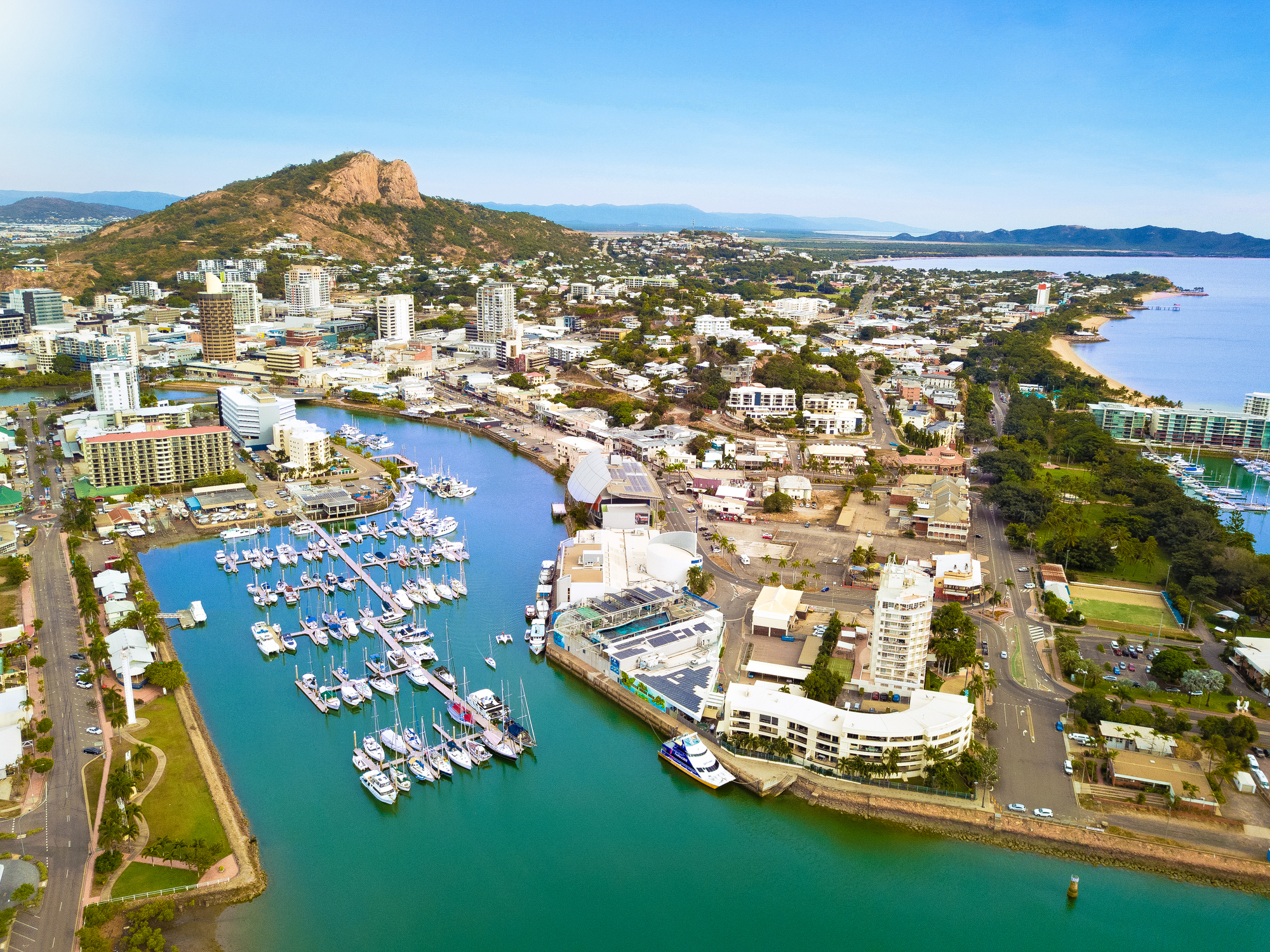
Townsville City Council is leading Northern Australia’s largest saltmarsh restoration project with the regeneration of 64 hectares of land along the Ross River.
The Townsville’s Living Coastlines – Spaces for Saltmarshes project is funded through a grant from the Australian Government’s Reef Coastal Restoration Program. It has involved collaboration between Council, James Cook University, First Nations groups and local businesses.
Divisional Councillor Brady Ellis said the $1.03 million project between Abbott Street and Ross River covered about the same area as 50 rugby league fields.
“This is a huge project that spells a massive win for the health of our environment, for waterways and for our local fishos,” Cr Ellis said.
“Saltmarshes are an important feature of our coastal landscape. They’re made up of plants that are tolerant of saltwater and are important breeding areas for animals like fish, curlews, crabs and prawns. Sadly, decades of vehicle access and illegal dumping has degraded this area.”
By the end of the project, almost 1000 trees, shrubs and grasses will have been planted to help reduce erosion and enhance water quality along the Ross River.
“It’s incredible to reflect on the scale of work underway to restore this important coastal landscape. Early results are very promising, with new seedlings and saplings popping up already which will continue to spread and heal the land,” Cr Ellis said.
“This project is particularly great for the environment as saltmarshes can capture and store carbon from the atmosphere and the ocean about 30 to 50 times faster than a forest can, so restoring the Oonoonba saltmarsh will have continued benefits for our atmosphere for many years to come.
Cr Ellis said the Townsville team has been working closely with Gudjuda Reference Group Aboriginal Corporation’s land and sea rangers.
The process includes scientific research in partnership with James Cook University, with 144 trial restoration plots established to assess sediment stabilisation treatments and monitor vegetation recovery.
Associate Professor Nathan Waltham led the project for James Cook University and said there were a whole range of important services that salt marshes provide, which were being damaged simply because people wanted to drive through them
“Our role was to work with Council and a local Indigenous group to transplant salt marsh and trial restoration techniques, then evaluate how successful that’s been over the last 18 months to two years,” Assoc Prof Waltham said.
The university will publish a series of peer‑reviewed papers examining plant recruitment, sediment dynamics, and the project’s contribution to blue carbon sequestration.
This research will provide valuable insights to support other future coastal restoration projects across tropical Australia.