By David Jenkins
Every asset rests on an elegant triangle: performance, cost and risk. Get the triangle right and communities barely notice their infrastructure, the highest compliment infrastructure can receive. Get it wrong and the consequences arrive as potholes, water main bursts, and angry deputations to council.
To manage that triangle, we build risk registers, and they are models of diligence. Flooding? Covered. Bushfire? Naturally. Tree root intrusion, vehicle impact, coastal erosion? All present and accounted for, neatly scored by likelihood and consequence.
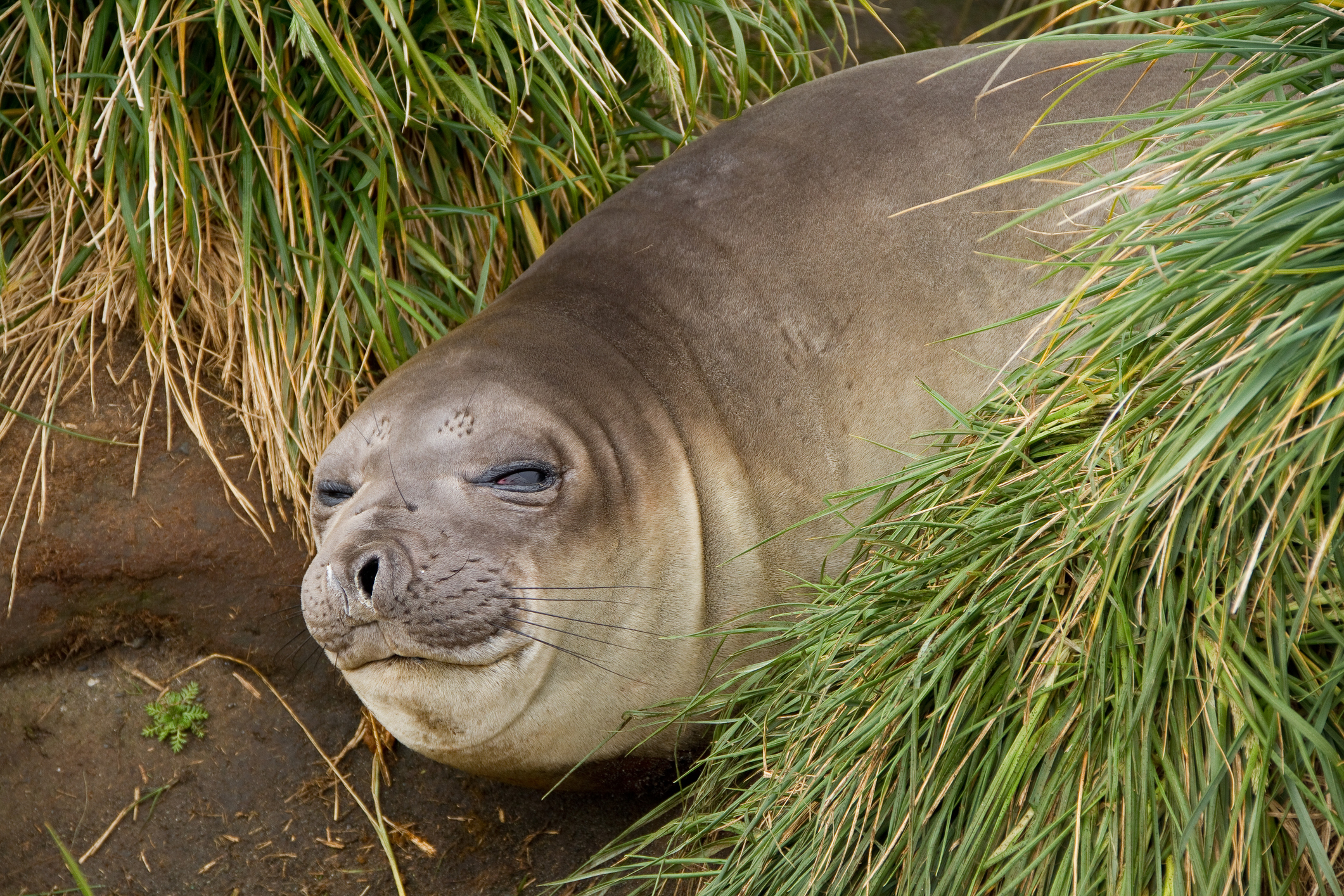
But nowhere, not in any register I have encountered, will you find a risk rating for the humble traffic cone that needs to withstand a 1000-kilogram southern elephant seal with 1.3 million TikTok followers and a documented enthusiasm for municipal traffic management devices. Cones and signage are assessed for wind loading, vehicle strike and theft. They are not assessed for Neil the Seal.
This, I would gently suggest, is a gap. At least if you’re in Hobart.
For the uninitiated: Neil the Seal is a young male elephant seal who, since 2022, has treated Greater Hobart less as a habitat and more as a series of comfortable furnishings. He has napped on arterial roads. He has occupied front lawns with the settled authority of a compulsorily acquired easement. He famously prevented a Tasmanian woman from getting to work by positioning himself against her car, an act which, had it been performed by a council contractor, would have required a traffic management plan, two spotters, and six weeks’ community notification. Neil required none of these things. Neil is, in regulatory terms, exempt.
And then there are the traffic cones. When well-meaning locals deployed cones to establish a protective perimeter around the moulting celebrity, Neil interpreted this not as a boundary but as an enrichment activity. The cones became toys. Somewhere in a Tasmanian council’s asset register, a line for “traffic cones, minor plant” quietly depreciated at a rate no useful-life assumption had contemplated. In Dunalley, a real estate agency’s fence was decommissioned entirely, an unplanned renewal, brought forward decades ahead of schedule by a marine mammal with no regard for intervention hierarchies.
Now, the asset management purists among you, and I know you’re out there, annotating this in the margins, will object that Neil is a force majeure event. An act of seal. Something to be absorbed under general contingency rather than dignified with its own risk line.
I disagree, and here’s why: good asset management is not about predicting the specific seal. It’s about acknowledging that the future will contain seals, plural and metaphorical. The entire discipline exists because infrastructure fails in ways that are individually surprising but collectively predictable. Nobody forecasts the exact pothole. We forecast pothole-ness. Hobart now has sufficient longitudinal data, four years of it, peer-reviewed by the ABC, the Guardian, and the New York Times, to establish that “large charismatic pinniped interferes with the road network” is no longer a black swan. It’s a grey seal. It has a name, an Instagram account, and a demonstrated pattern of asset interaction.
Consider what a mature approach might look like. Levels of service: “Road available for use, except during moulting season, subject to seal.” Condition assessment methodology: amended to include a fifth degradation mechanism alongside cracking, rutting, ravelling and oxidation, namely, flattening. Criticality frameworks: any assets within 200 metres of the shoreline reweighted for what we might call blubber-adjacent exposure. And the renewal forecast for cones and temporary fencing? Straight-lined upward, indefinitely, or at least until Neil discovers a hobby that isn’t infrastructure.
There’s a serious point buried under the blubber, of course. There always is. Our risk registers are honest records of what has already gone wrong somewhere, sanitised into categories. They are backwards-facing documents wearing forward-facing language. The things that actually blindside communities, pandemics, unprecedented rain cells, a seal on the Southern Outlet, share one trait: they were visible, they were even famous, and they still weren’t in the plan, because they didn’t fit the template. If your framework can’t accommodate a hazard with its own Wikipedia page, the problem is not the hazard.
Councils on the mainland can relax, mostly. Your probability of seal remains low, though I’d note Neil was relocated once and reappeared 110 kilometres away, which is a better redeployment success rate than most plant and fleet strategies achieve. But for Hobart and its surrounds, I say lean in. Be the first jurisdiction on Earth with a formally adopted Pinniped Interaction Management Plan. Put Neil in the register. Score him, likelihood: almost certain; consequence: adorable but expensive.
Because the first rule of asset management is that you cannot manage what you do not measure. And the second rule, newly minted in Tasmania, is that you cannot measure what is currently asleep on top of it.
The author is a public works professional who wishes to declare that no traffic cones were harmed in the writing of this piece. The same cannot be said for Hobart’s.