What Local Governments Need to Know and What They Can Do About It
What Is ALAN?
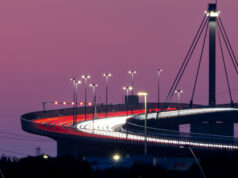
Artificial Light at Night (ALAN) refers to any human-generated lighting that persists after sunset and disrupts the natural dark cycle of the environment. While the concept may sound straightforward, its scope is broad as ALAN encompasses: street lighting, illuminated building facades, commercial signage, building lighting that is left on after dark, sports grounds, security lighting, outdoor lighting around our homes and vehicle headlights all contribute to ALAN.
ALAN, which has expanded dramatically since electrification over a century ago, is now rapidly eroding the reliable rhythm of day and night. It is also gaining prominence as a public policy issue.
The Illuminating Engineering Society of North America (IESNA), the Illuminating Engineering Society of Australia & New Zealand (IESANZ), the Institution of Lighting Professionals (ILP(UK)), the International Dark-Sky Association (IDA), the Australian Dark Sky Alliance (ADSA) and many other well-regarded bodies have all recognised ALAN as a significant environmental concern. A variety of guidance documents and model regulations has been published by such organisations in recent years. In the UK and New Zealand there have been parliamentary enquiries in recent years and legislative change have been enacted or proposed in a number of European countries and US states.
Attention to ALAN is growing in Australia but there has been less regulatory change thus far than in other markets. However, the Department of Climate Change, Energy, the Environment and Water (DCCEEW) published updated National Light Pollution Guidelines for Wildlife in 2023, providing a national policy framework applicable to councils managing land near sensitive habitats.
The Scale of the Problem
ALAN is not a niche concern, it is a pervasive and growing form of environmental change (and in many cases, is now regarded as a pollutant). In short, poorly designed outdoor lighting that over-illuminates, misdirects light, or keeps lighting on when it is not needed is actively harming the communities and ecosystems that councils are responsible for. It is also a clear waste of energy.
Research published in peer-reviewed literature has found that lit areas worldwide are increasing by approximately 2.2% annually, and in some regions at more than 9% a year. 99% of the population of Europe, and a similarly high proportion of Australians, now lives under light-polluted skies. Concerningly for astronomers and others with an interest in preserving dark skies, skyward light pollution is growing by 10% a year.
Impacts on Human Health
The human circadian system is highly sensitive to light, particularly to short-wavelength (blue) light in the range of 460–480 nm. Even low irradiances of blue-wavelength light at night can suppress the production of melatonin, the hormone that regulates the sleep-wake cycle and plays a role in numerous physiological functions. Cool white LEDs produce considerably greater melatonin suppression than warm white or amber light sources.
Chronic circadian disruption arising from ALAN exposure has been associated in epidemiological research with impaired sleep quality, mood disorders, metabolic dysregulation, obesity, diabetes, cardiovascular disease, and increased cancer risk. Given that humans generally sleep indoors behind walls, curtains, blinds and shutters, what is less clear at this point is the extent to which outdoor ALAN is causing these kinds of human health impacts.
Impacts on Wildlife and Ecosystems
ALAN’s effects on fauna are extensive and well documented. The DCCEEW National Light Pollution Guidelines for Wildlife (2023) identify impacts on marine turtles, seabirds, migratory shorebirds, bats, and terrestrial mammals, as well as broader ecological communities. Disrupted navigation is one of the most visible effects: hatchling sea turtles rely on natural light gradients from the ocean to find their way to the water, and coastal artificial lighting causes fatal disorientation.
Migratory birds attracted to lit buildings have been found circling in fatal patterns; nocturnal insects are drawn to and killed around artificial light sources, undermining the food webs that depend on them; bats, many of which are threatened species in Australia, avoid lit areas, fragmenting their foraging habitat.
Research has also found that the effects of ALAN extend beyond directly illuminated areas, altering movement, dispersal, and reproductive ecology in adjacent habitats, meaning a single poorly placed luminaire can have consequences well beyond the lit zone itself.
Drawing on Australian and New Zealand Road Lighting Standards (AS/NZS 1158) and the advice of leading experts, IPWEA recommends a maximum of 3000K for residential streets, car parks, and pathways, with 4000K limited to high-volume or high-speed roads and key commercial precincts. Lower colour temperatures and amber lighting may be more appropriate in ecologically sensitive areas — and no lighting at all as the preferred option where biodiversity value is high.
As noted in the DCCEEW guidelines note, Australian legislation and standards regulate artificial light for human safety, and that where competing objectives arise, creative solutions are needed that meet both safety and environmental requirements. The DCCEEW guidelines establish a process for assessing and managing risk, tailored to the species and conditions at each site.
What Local Governments Can Do
Distilling DCCEEW, IES and ILP advice, there are five key measures that any local government seeking to manage ALAN responsibly can take:
- Light only where needed. If there is no purposeful intent to light an area, do not apply light there.
- Direct light downward. Specify zero-uplight or fully shielded fixtures so that no light is emitted above the lowest light-emitting part of the fitting.
- Use only as much light as the task requires. Exceeding recommended illuminance levels wastes energy and increases ALAN impacts without improving safety.
- Use controls. Smart controls and motion sensors ensure lighting is on only when needed and at the minimum intensity required.
- Choose the right colour. Warm, amber-toned light (≤3000K) minimises blue-wavelength emission and reduces harm to both human health and wildlife.
In terms of getting their information, policy and planning controls in order, local governments would benefit from taking two key steps:
- Ensuring that their public lighting inventories are in good shape (including with respect to the location, CCT and output of each luminaire). Biodiversity mapping can then help identify which lights pose an elevated risk to sensitive species and habitats. Interventions can then be prioritised based on risk.
- Updating council policies and planning instruments can have a significant impact on ALAN. Indeed, it is now believed that public lighting may be only contributing 20% of total light pollution. Illuminated building facades, commercial signage, building lighting that is left on after dark, sports grounds, security lighting, outdoor lighting around our homes and vehicle headlights all contribute to ALAN. In the absence of widely accepted model policies in Australia, the North American IES Lighting Zone classification system and the UK ILP Environmental Zone framework are both interesting references as they give planners, developers, and applicants a clear, measurable standard against which new or altered outdoor lighting installations can be assessed.
In summary, ALAN is a form of environmental pollution that is, as DCCEEW has noted, uniquely removable. Unlike most pollutants, it can be switched off immediately. Local governments control part of the source of ALAN and have policy responsibility for much of the rest. For Australian local governments, this represents both a responsibility and an opportunity. While the debate is less advanced in Australia than in some other countries, every council would be well-advised to take the steps outlined in this article to act on ALAN.
NOTE: This article is intended as an introductory summary. Councils are encouraged to engage a qualified lighting engineer or sustainability consultant when planning lighting upgrades or policy development.