Like many countries New Zealand is approaching a demographic tipping point due to its ageing population and declining birth rates but a second tipping point is also coming as people leave the regions for the largest city of Auckland.
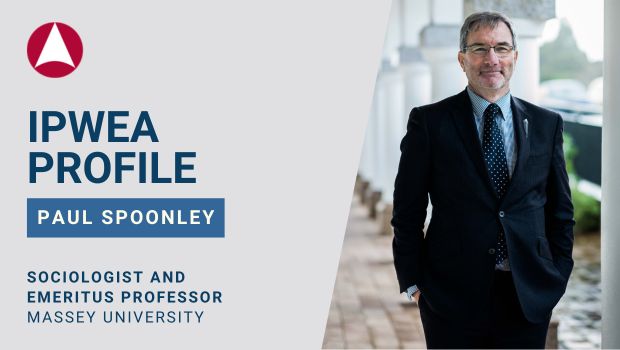
Paul Spoonley, a sociologist and emeritus professor at Massey University, says that Auckland – with a population of approximately 1.8 million people – is currently home to around one third of the New Zealand population, but that is tipped to reach 40 % within two decades.
While much of New Zealand is experiencing population stagnation – or, in some cases, population decline – Spoonley comments that “Auckland is still growing because it is the destination for between 50% and 60% of any immigrants”.
“The issue for Auckland is always that the services infrastructure has not kept up with population growth.”
Not only do government planners have to contend with this drift from the regions, but there are a number of regions where New Zealand is experiencing “hyper ageing.”
“These are areas where at least 30% of the population is aged over 65, and because many are on fixed incomes, there is a limit on how much you can extract from them in terms of rates, and rate increases,” says Spoonley.
“So the dependency ratio, which is the ratio of people in work compared with those on superannuation, is going to move from six to one, to two and one during my lifetime, and that fundamentally changes how governments generate tax but also raises questions on where they should spend tax revenue.”
Spoonley describes this as the “hollowing out” of regional New Zealand, and this was emphasised by the number of “mega schools” in New Zealand with more than 2500 students.
“We have six of these mega schools and five of them are in Auckland,” he says.
“It is an illustration of how parts of regional New Zealand are struggling to maintain core services such as education and health, and this has an impact on the ability to attract people to work in these areas.”
Understanding these demographic changes and challenges and their impact on the affordability of services and infrastructure, social cohesion and equity has been Spoonley’s area of expertise for several decades.
In addition to studying and teaching on these subjects, both in New Zealand and overseas, he has been an adviser to government on the integration of immigrants, including serving as co-director of the Centre of Research Excellence for Preventing and Countering Violent Extremism He Whenua Taurikura.
The centre was established in line with the recommendations of the Royal Commission of Inquiry report into the 2019 Christchurch mosque shootings.
Understanding that issues around immigration can be contentious and divisive, Spoonley advocates for the “de-politicisation” of the population policy as New Zealand anticipates the forces of change and in framing a response.
While New Zealand’s immigration levels peaked two years ago with a net gain of more than 130,000 people, it is now in a slump where the net gain is less than 14,000 per year.
Combined with an ageing population and the drift from the regions, this low population growth might appease the anti-immigration lobby but is likely to have a negative impact on economic growth over the longer term.
“We’ve obviously got onshore talent, but a lot of our talent has always come from another country,” says Spoonley.
“Our population growth has been extremely volatile in recent years, and that impacts on the availability of labour and skills.”
Another complication was the drift of talent, particularly of young people and largely in the direction of Australia.
“We’ve had two spikes in this phenomenon,” says Spoonley.
“The first was around the years of the global financial crisis, and then over the last year, we had another spike of about 70,000 New Zealanders leaving annually, and about 60% of them are going to Australia.
“Governments have tended to ignore this issue because I’m not sure they know what to do with it, and they’ve also ignored the fact that that we’ve got more than a million people living in other countries who are New Zealand citizens.”
Spoonley advocates for a “diaspora management policy” in response.
“Even though they are living in Brisbane, we can still use their skills, knowledge and their networks even if they don’t come back to the country, but we don’t do that,” he says.
“I think we have been a little naïve and behind the eight ball in terms of how to deal with this, and to develop policies to either recruit them to come back or to use their loyalty and expertise where they live.”
Any demographic changes in New Zealand in coming years, says Spoonley, will not come as a surprise.
“We know what the country is going to look like,” he says. “My frustration is that the evidence is all there, but there is a reluctance to adjust our policy settings on what we’re going to need.”
While supportive of changes the current government has made to infrastructure planning and to get projects moving faster, Spoonley returns to the need for a bi-partisan population policy if New Zealand is to tackle the demographic challenge of the future.
This would help to clarify the “social licence” of governments as they set immigration policy for example.
“Governments should be about anticipating the long-term future of this country and providing the services and infrastructure that will be appropriate for that future,” he says.
“It also means that we need to re-look at infrastructure and how we prioritise it, given the huge demographic changes that this country is facing.”
Professor Paul Spoonley will be speaking at the upcoming 2026 IPWEA New Zealand Public Works Forum on Thursday 30 April.