Australia’s waste management sector is under increasing pressure as governments work to reduce landfill, invest in recycling infrastructure and support a circular economy. At the same time, waste operators and local councils face rising fuel, maintenance and compliance costs while operating on tight margins. In this environment, reducing fleet costs is critical.
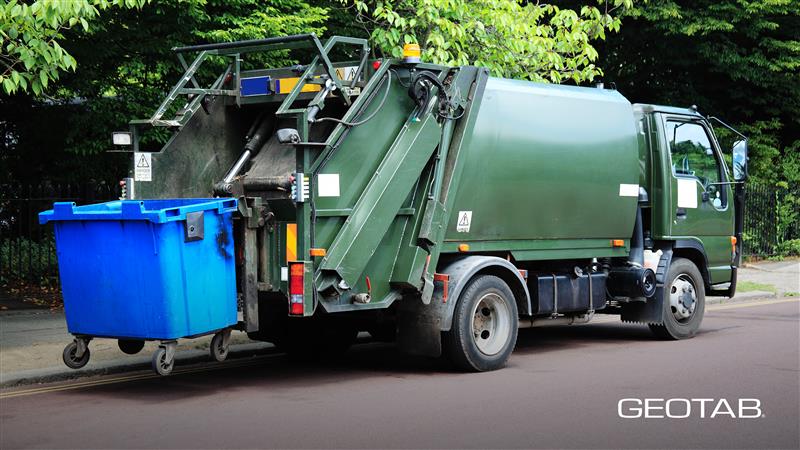
Garbage trucks are the backbone of waste operations and must be carefully managed to avoid downtime and inefficiency. Telematics technology provides real-time visibility into vehicle health, driver behaviour and route performance, enabling proactive decision-making. With better data, waste management fleets can operate more safely, efficiently and cost-effectively.
Here are six ways telematics helps reduce costs across waste management fleets.
- Reduce fuel spend
Fuel is one of the largest operating expenses for waste fleets. Telematics helps lower fuel costs by monitoring consumption, idling, engine performance and driving behaviour.
By identifying excessive idling and inefficient driving, fleet managers can coach drivers to reduce unnecessary fuel use. Route optimisation also eliminates unnecessary kilometres and time spent in traffic, lowering fuel costs and emissions.
Telematics data supports Greenhouse Gas Emissions reporting under the National Greenhouse and Energy Reporting Scheme and helps distinguish off-road and on-road usage. This allows fleets to claim higher Fuel Tax Credit rates for auxiliary equipment such as compactors and lifts, in some cases offsetting the cost of telematics entirely.
- Reduce liability risk
Telematics reduces liability risk by improving driver safety and protecting fleets against false or disputed claims.
Driver scorecards, in-vehicle coaching and AI-powered video telematics help identify risky driving behaviours early and support targeted interventions. These insights assist with workplace health and safety compliance and help meet Chain of Responsibility obligations under Heavy Vehicle National Law.
AI-enabled analytics can also predict future collision risk by analysing fleet-specific data and operating conditions. If an incident occurs, telematics provides objective data such as impact severity, GPS location, braking data and video footage. This evidence helps clarify fault, exonerate drivers and reduce insurance and legal costs.
- Reduce call backs
Missed collections and customer call backs increase fuel use, labour costs and overtime. Telematics reduces call backs by providing accurate tracking of vehicles, routes and pickups.
When integrated with waste routing software, telematics verifies that routes are completed as planned and records detailed information about each stop. Managers can confirm collections occurred at the correct time and location, reducing disputes and eliminating unnecessary return trips. This lowers operational costs and improves service reliability.
- Reduce downtime
Downtime is costly for waste fleets that operate daily with little flexibility. Telematics supports predictive maintenance and real-time monitoring to keep vehicles on the road.
By analysing engine data and fault codes, fleet managers can identify potential issues early and schedule maintenance before breakdowns occur. This reduces unplanned downtime and extends vehicle life.
Telematics integrations also enable more efficient route planning, with adjustments based on traffic and route progress. Automated alerts for diesel particulate filter regeneration ensure trucks complete regen cycles at the right time, helping prevent costly filter failures. These capabilities are particularly valuable in Australian operating conditions with frequent stopping and starting.
- Lower total cost of ownership
Waste collection vehicles are high-value assets, making longevity essential to controlling long-term costs. Telematics enables better maintenance planning and informed replacement decisions.
Predictive maintenance reduces the risk of major repairs, while ongoing monitoring of vehicle health supports smarter servicing and replacement cycles. Maintenance dashboards and inspection histories provide clear visibility into vehicle condition, helping fleets calculate cost per kilometre and maximise asset value. Extending vehicle lifespans significantly lowers total cost of ownership.
- Decrease administrative overhead
Manual paperwork and disconnected systems increase administrative costs and the risk of errors. Telematics automates many processes, reducing reliance on paper route sheets and work orders. Through open APIs and software integrations, telematics connects fleet operations with ERP and billing systems. This ensures accurate tracking of completed services, overflow collections
Through open APIs and software integrations, telematics connects fleet operations with ERP and billing systems. This ensures accurate tracking of completed services, overflow collections and additional pickups, leading to faster revenue recovery and more precise billing. Automation also saves significant staff time, allowing teams to focus on higher-value tasks.
Cutting costs and boosting efficiency with telematics
Telematics helps waste management fleets cut fuel costs, reduce liability risk, minimise downtime, eliminate call backs and lower administrative overhead. Beyond cost savings, it enables safer, more reliable and more sustainable operations.
Geotab’s waste management solutions help public and private fleets gain real-time insights and streamline operations through a single, integrated platform. By leveraging telematics, waste operators can build more efficient, cost-effective and future-ready fleets.